Volume 1 · Books 1–2
Volume 1
- Opening Narrative
- Book of Beginnings

The Common Books are thirty-four works of imaginative literature arranged in nine volumes. Stories, correspondence, reflections, lament, household life, conflict, work, childhood and death all have a place here. Together they provide much of the imaginative background to the Continuance philosophy.
The Common Books use different voices and forms. Some are long narratives. Others are records, correspondence, songs, lament, legal material or intimate accounts of ordinary life. Their differences are part of the reading experience.
They are held together by the Continuance, but they are not written as one continuous lecture. Tension, viewpoint, consequence and interpretation belong to the reading of them.
The literary cycle is complete at thirty-four books. New commentary, criticism and philosophical writing can grow around it without retroactively adding another numbered book.
The numbered books appear below in their original literary sequence. The nine-volume arrangement is a publishing format; it does not change their order.
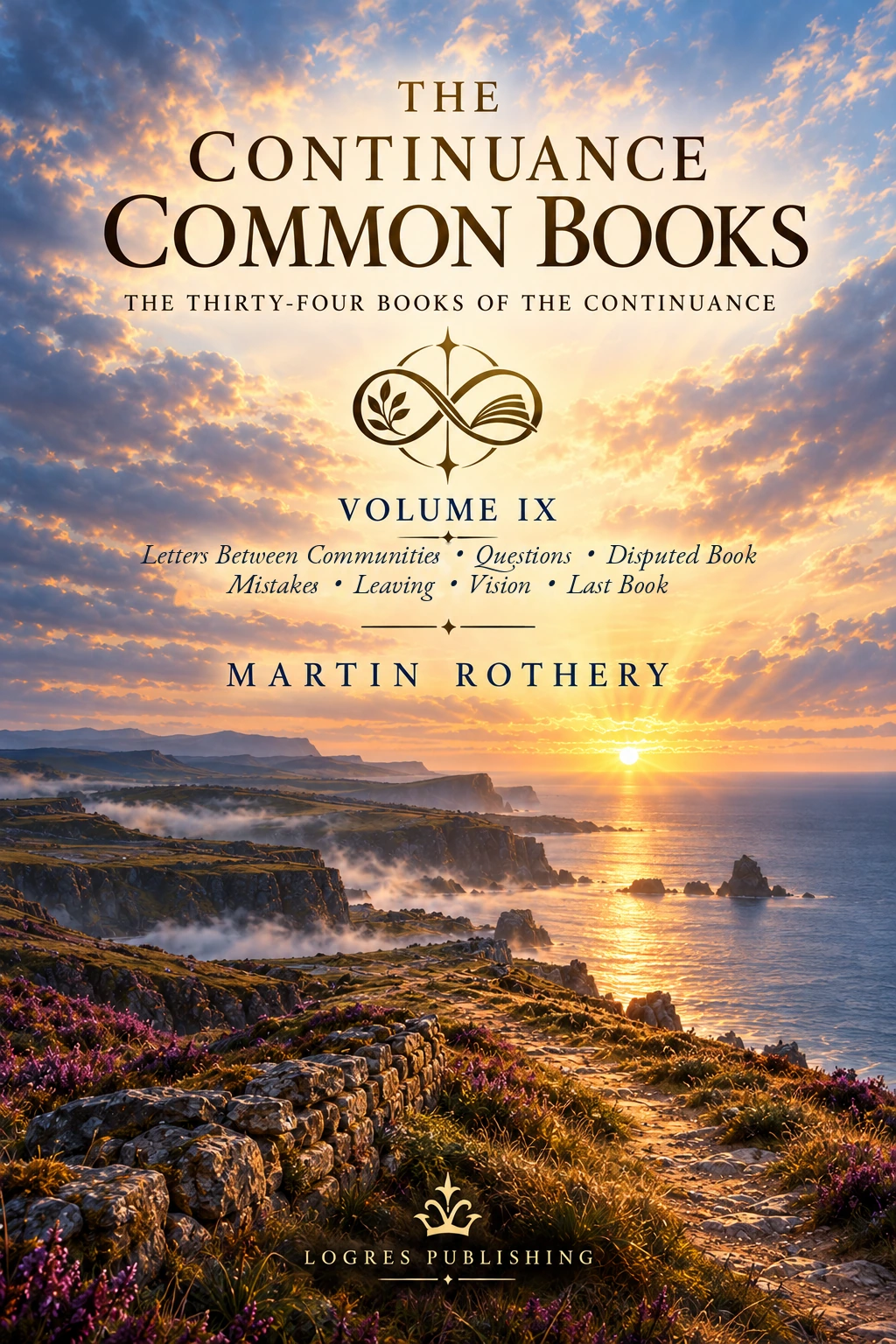
Reading from Book One follows the full literary movement. You can also approach the books by theme, occasion or curiosity, and return to them with different questions.
Opening Narrative through Book After Victory move from encounter and beginnings into domestic life, travel, authority, rebellion and what follows victory.
The War Books and the books that follow them turn towards evidence, grief, land, travel, money, identity, doubt and inward experience.
The later books move through healing, accusation, childhood, ageing, dying, memory, ordinary things, communal voice, error, departure and responsibility to the future.
The Common Books have a central place in the development of the philosophy. They do not remove personal judgement. Interpretation remains fallible, and quoting a passage gives nobody authority over another person.
The thirty-four Common Books form the existing literary sequence.
Commentary and discussion may change as people learn, argue, discover and live.
No story or passage may be used to excuse coercion, secrecy, abuse, exploitation or the suppression of disagreement.
The Common Books form a complete literary cycle. Other Continuance works introduce the philosophy, examine its practices and explain how its ideas may develop.
Martin Rothery’s central exposition of the philosophy, written to be read beside the Common Books.
A companion for private and shared practices, calendar observances and reflection.
A framework for changing a philosophy openly, with records of disagreements and revisions rather than pretending every question was settled from the beginning.
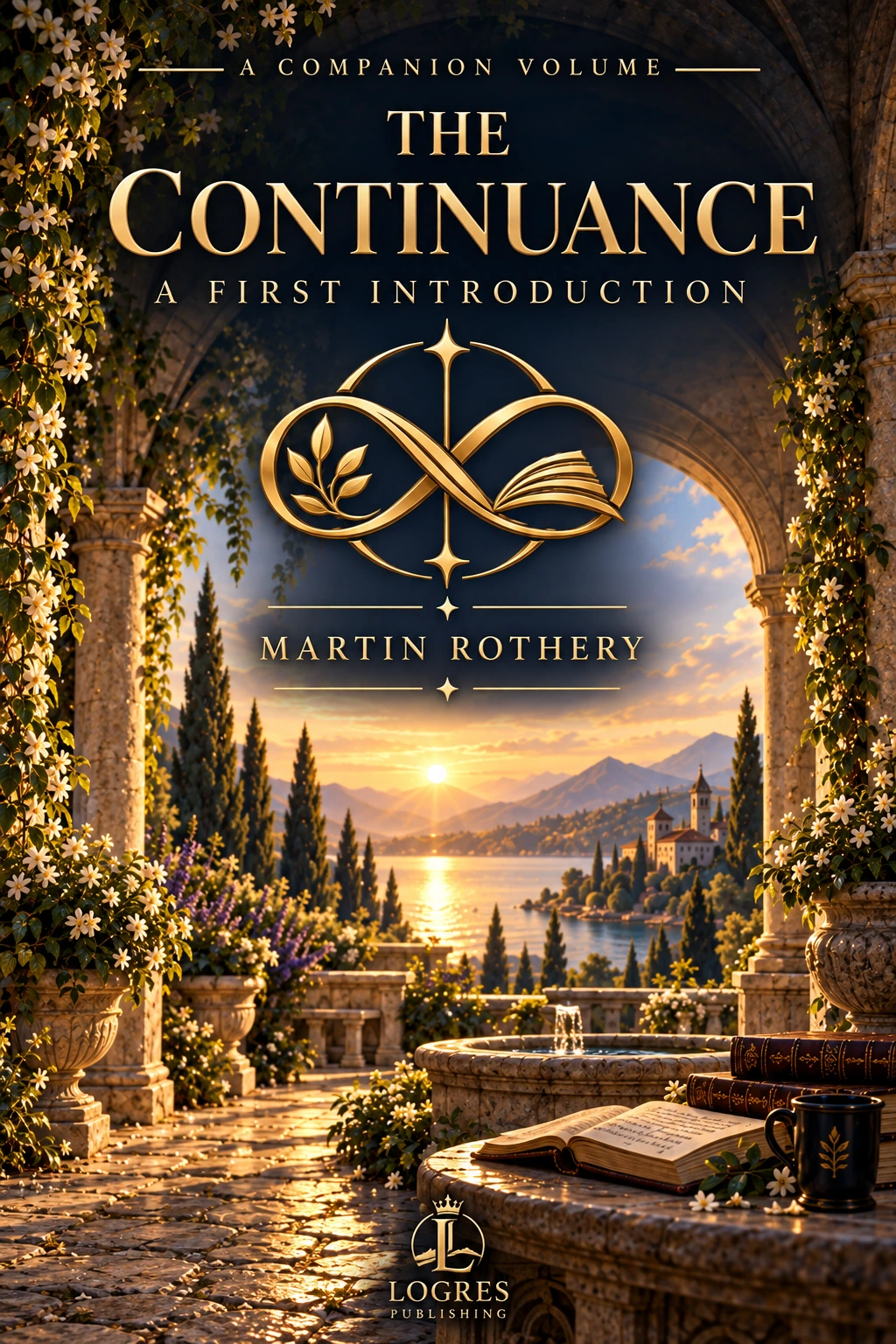
The short public introduction for anyone who wants to understand the essentials of the Continuance before going further.
Free